


As more Canadians look for opportunities in growing cities, Calgary continues to attract professionals, families, and retirees seeking a balance between career opportunities, outdoor recreation, and comfortable living.
With its expanding economy, relatively accessible housing options, and proximity to the Rocky Mountains, moving to Calgary, AB, can be an exciting opportunity.
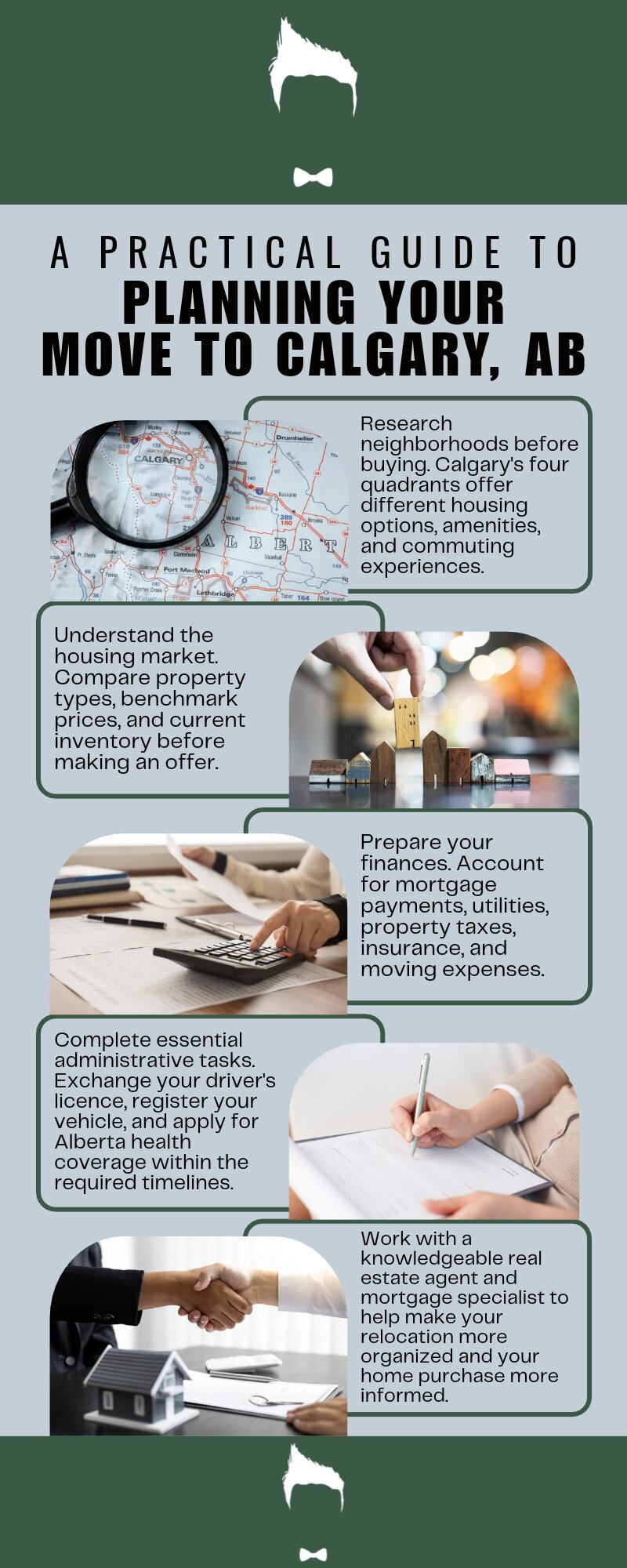
However, relocating to a new city involves more than finding a house. From researching neighborhoods and understanding the local real estate market to arranging utilities and updating important documents, preparation makes a significant difference.
Whether you are already browsing Calgary homes for sale or considering a future relocation Calgary experience, having a clear plan can make the transition much easier.
This Calgary relocation guide covers the essential steps to help you prepare financially, choose the right community, and settle comfortably into your new home.
The Core Appeal of Living in Calgary, Alberta
Moving to Calgary, AB, offers new residents a high standard of living characterized by relatively affordable real estate, a diverse and growing economy, and zero provincial sales tax. Living in Calgary, Alberta, seamlessly blends big-city amenities and vibrant cultural districts with effortless weekend access to Banff and Kananaskis Country.

Navigating the Calgary Real Estate Market
Understanding Calgary Homes for Sale
One of the first priorities when planning a move is understanding what the local housing market offers. Compared with Toronto and Vancouver, Calgary generally provides buyers with more opportunities to find detached homes and larger living spaces at different price points.
Calgary real estate market includes downtown condominiums, traditional single-family houses, townhomes, duplexes, and newer properties in developing suburban communities.
According to the Calgary Real Estate Board‘s October 2026 report, the city’s overall residential benchmark price was approximately $564,200. Detached homes had a benchmark price of $735,100, while apartment condominiums averaged a benchmark of $288,800. These figures demonstrate how property type can significantly influence your purchasing budget.
Market conditions also vary. October’s data showed relatively balanced conditions for detached and semi-detached homes, while apartments and row homes offered buyers more supply to consider.
Before making an offer, compare recent sales, property taxes, condominium fees, and potential maintenance expenses. Buyers relocating from outside Alberta should also account for closing costs and moving expenses.

Choosing the Right Quadrant
An important part of any Calgary relocation guide is understanding the city’s four residential quadrants: Northwest (NW), Northeast (NE), Southwest (SW), and Southeast (SE).
Centre Street divides the eastern and western sections, while the Bow River forms an important northern and southern geographic boundary. Each quadrant contains communities with different housing styles, amenities, and commuting options.
- Northwest (NW): Popular for its established communities, newer developments, university access, and outdoor spaces. Areas near Nose Hill Park are particularly appealing to nature enthusiasts.
- Southwest (SW): Offers mature residential neighborhoods, upscale properties, shopping districts, and convenient access to Glenmore Reservoir.
- Southeast (SE): Features newer master-planned communities, recreational lakes, family-friendly amenities, and access to South Health Campus.
- Northeast (NE): Known for its cultural diversity, commercial centers, airport access, and a variety of comparatively affordable housing options.
Consider where you will work, where your children might attend school, and how frequently you need public transportation before selecting a neighborhood.
Financial Preparation and Cost of Living
The Alberta Tax Advantage
One financial benefit of moving to Calgary is Alberta’s tax structure. Unlike most Canadian provinces, Alberta does not charge a provincial sales tax.
Residents generally pay the 5% federal Goods and Services Tax (GST) on taxable purchases rather than an additional provincial sales tax.
Alberta also has a progressive provincial income tax system, with 2026 rates beginning at 8% on the first $61,200 of taxable income. Your actual tax bill will depend on your income, deductions, and applicable credits.
Although these advantages can help households manage their expenses, remember to compare the overall cost of living rather than focusing exclusively on taxes. Housing, transportation, childcare, insurance, and utilities should all factor into your relocation budget.
Budgeting for Utilities and Seasonal Shifts
Calgary experiences four distinct seasons, and winter preparation is particularly important for newcomers.
Environment and Climate Change Canada’s 1991–2020 climate normals show average daily temperatures of approximately -7.6°C in January and 16.9°C in July. Winter conditions can become considerably colder, although Chinook winds sometimes bring temporary periods of warmer weather.
Natural gas heating can contribute significantly to household utility expenses during colder months. Electricity, water, waste collection, and internet services should also be included in your monthly budget.
Before purchasing a property, check its insulation, windows, heating equipment, and overall energy efficiency. A professional home inspection can help identify potential maintenance concerns and expenses.
Essential Calgary Moving Tips and Logistics
Timing Your Move and Hiring Professionals
The timing of your move can influence both your expenses and the amount of work involved.
Summer is traditionally a popular moving season because of warmer weather and more flexible travel conditions. However, moving companies may experience higher demand, so booking early is recommended.
Spring and early autumn can offer more flexibility for households with adjustable schedules. If you must move during winter, prepare for snow, icy roads, and possible weather-related delays.
Request quotes from several moving companies and confirm what their services include. Ask about insurance coverage, packing materials, transportation fees, and delivery schedules.
If you are moving from another province, arrange temporary accommodation if your property purchase or possession date does not align with your arrival.

Updating Documentation and Services
Administrative tasks should be part of your relocation checklist.
If you are moving permanently from another Canadian province, Alberta requires you to exchange your existing driver’s licence within 90 days of becoming a resident. You must also register your vehicle in Alberta within 90 days of moving.
New residents should also apply for Alberta Health Care Insurance Plan (AHCIP) coverage. If you are relocating from another Canadian province or territory and intend to remain in Alberta for at least 12 months, you must register within three months of establishing residency.
Your previous provincial health coverage generally remains available during the applicable waiting period.
Other important tasks include:
- Updating your mailing address with Canada Post and financial institutions.
- Transferring or arranging home and vehicle insurance.
- Setting up electricity, natural gas, water, and internet services.
- Updating your address with government agencies and employers.
- Transferring school and medical records where necessary.
Completing these tasks early will help prevent unnecessary interruptions after arriving.
Next Steps for Prospective Newcomers
Securing Pre-Approval and Local Representation
If purchasing a property is part of your relocation plan, begin by speaking with a mortgage professional. Getting pre-approved helps establish a realistic price range and gives you a clearer understanding of your borrowing capacity.
This is particularly important if you are purchasing from another province, as lenders may request additional employment, income, or financial documentation.
Working with a Calgary real estate agent who understands out-of-province purchases can also simplify the process. A knowledgeable local representative can arrange virtual property tours, explain neighborhood differences, provide comparable sales information, and help you navigate negotiations.
Before committing to a property, review the inspection results, title information, property disclosures, and any applicable condominium documents.

Planning a Discovery Visit
If possible, visit Calgary before finalizing your move. Spending a few days exploring different neighborhoods can help you understand what everyday life might look like.
Visit potential communities during different times of the day to assess traffic, noise, parking, and accessibility. If you plan to commute without a car, test the CTrain and bus services along your preferred routes.
You can also explore popular recreational destinations, including Prince’s Island Park, Fish Creek Provincial Park, and the communities surrounding Glenmore Reservoir.
A discovery visit allows you to compare neighborhoods based on actual experience rather than relying entirely on online listings and photographs.
Calgary Quadrant Lifestyle Comparison Table
Choosing the right quadrant can make a significant difference in your experience after relocating. The following comparison highlights some general lifestyle characteristics to help narrow your search.
| City Quadrant | Primary Vibe & Geography | Key Amenities & Features | Best Suited For |
|---|---|---|---|
| Northwest (NW) | Scenic, established, and expanding residential communities | University of Calgary, Nose Hill Park, mountain access | Students, families, and outdoor enthusiasts |
| Southwest (SW) | Upscale properties, mature trees, and vibrant inner-city areas | Beltline nightlife, Mount Royal, Glenmore Reservoir | Young professionals and luxury buyers |
| Southeast (SE) | Master-planned developments, recreational lakes, and suburban living | Mahogany and Auburn Bay lakes, South Health Campus | Growing families and suburban lifestyle seekers |
| Northeast (NE) | Diverse communities, accessible housing, and commercial hubs | Calgary International Airport (YYC), LRT access | Frequent travelers and value-conscious buyers |
Remember that these are broad descriptions. Individual neighborhoods can differ considerably in property prices, amenities, transit access, and overall atmosphere.
Embracing Your New Life in Southern Alberta
Planning a move involves several important decisions, but taking a structured approach can make the experience much more manageable. From researching Calgary homes for sale to preparing your finances and arranging essential services, each step brings you closer to settling into your new community.
A successful relocation Calgary experience starts with understanding your priorities. Consider your preferred property type, commuting requirements, household budget, and lifestyle expectations before choosing a neighborhood.
If you are preparing for moving to Calgary, AB, professional local guidance can help you avoid unnecessary complications and make more confident real estate decisions.
Whether you are searching for your first home, upgrading to a larger property, or relocating your family, having an experienced real estate professional by your side can make the process considerably easier.
Ready to explore your options? Contact me today at (403) 701-6358 or email Ram@RamSund.com to discuss your home-buying goals and get personalized guidance on finding the right property in Calgary.
Frequently Asked Questions
Is moving to Calgary, AB a good financial decision in 2026?
It can be, particularly for buyers seeking relatively accessible housing, employment opportunities, and Alberta’s favorable sales tax structure. However, the right decision depends on your income, housing budget, employment prospects, and household expenses.
What are the best neighborhoods to look at when browsing Calgary homes for sale?
The best neighborhood depends on your priorities. Northwest communities appeal to families and outdoor enthusiasts, Southwest neighborhoods offer established residential areas and upscale properties, Southeast communities provide newer developments and recreational amenities, and Northeast neighborhoods offer diverse housing options and airport access.
What does a reliable Calgary relocation guide recommend for winter preparation?
Prepare for freezing temperatures, snow, and icy roads. Invest in appropriate winter clothing, arrange suitable vehicle tires, check your home’s heating system, and budget for higher heating expenses during colder months.
How long do I have to switch my driver's license after moving to Calgary?
Permanent residents moving from another Canadian province must exchange their existing driver’s licence for an Alberta licence within 90 days of becoming an Alberta resident.
What are the most important Calgary moving tips for out-of-province buyers?
Secure mortgage pre-approval, research neighborhoods, compare moving companies, arrange temporary accommodation if necessary, and prepare important documents. Working with a local real estate agent can also help you navigate the housing market remotely.
How is public transit for those living in Calgary, Alberta?
Calgary has an established public transportation network consisting of CTrain light rail services and buses. The two CTrain lines connect several residential areas with downtown and other major destinations. However, transit convenience depends on your neighborhood, workplace, and daily schedule.
Which quadrant is best for a smooth relocation Calgary experience with a family?
Northwest and Southeast Calgary are popular starting points for families because of their residential communities, schools, parks, and recreational amenities. However, the best choice depends on your budget, preferred home style, school requirements, and commute.